
Yes. Preparation is required for a pond liner application. We have a standard subgrade preparation manual for your reference. Once RCR® is in place and hydrated, the hardened surface will contour to the subgrade.

Secondary Containment Lining
RCR® for Sturdy, Cost-Effective
Environmental Protection
ITL Reinforced Concrete Roll® (RCR®) is a geosynthetic cementitious composite mat (GCCM) that can be applied for secondary containment to protect against spills and byproducts.
For secondary containment purposes, RCR® may be applied to containment ponds, splash pads, and berms.
The permeability of RCR® is very low, and there is no soil movement beneath the RCR® at high water velocities, so most of the time, there is no need for the use of an underlying geomembrane. If 100% containment is needed, we can help you identify which geomembrane liner should first be deployed based on what chemical(s) are of environmental concern if released from the primary containment.
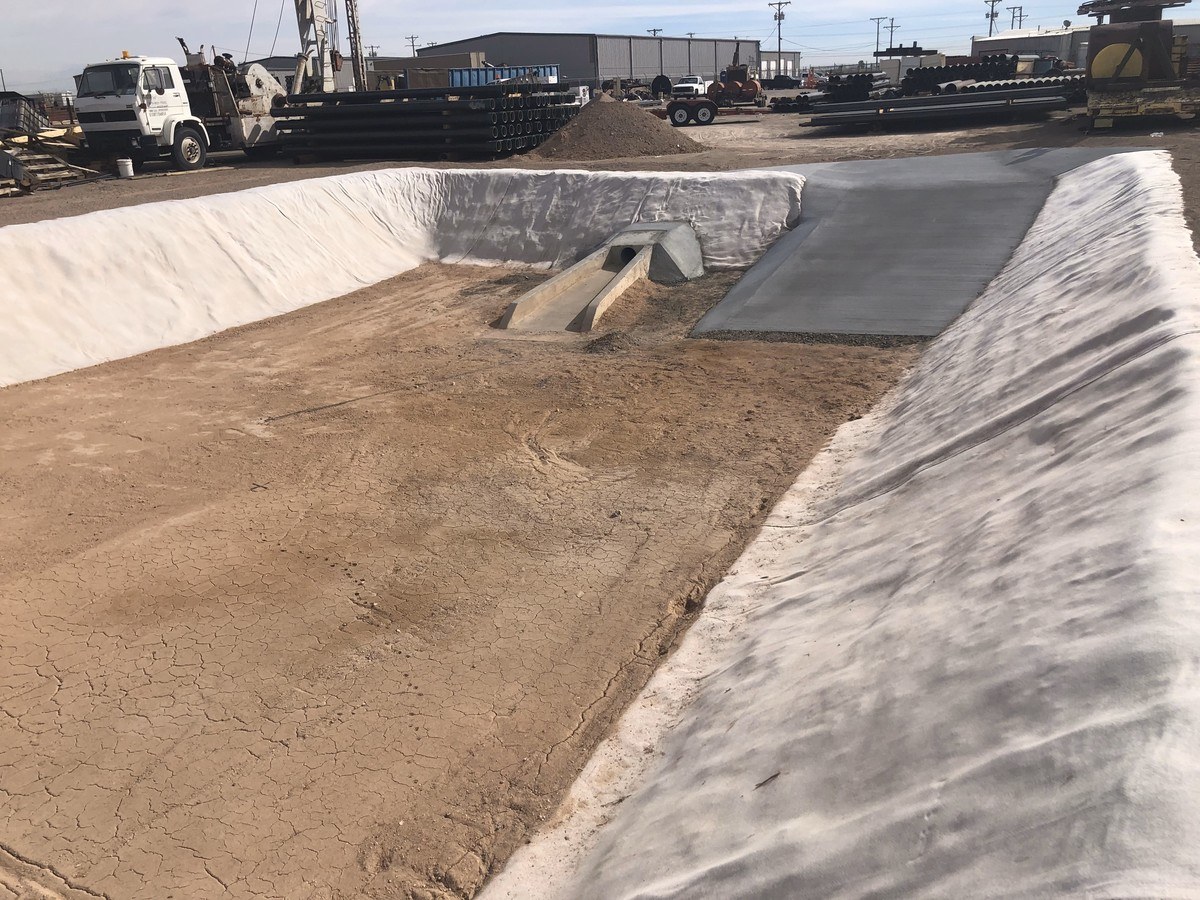
Containment Ponds
A solid barrier for secondary containment ponds, RCR® can protect an underlying geomembrane liner and is strong enough to handle animal and light equipment traffic.
When applied to overflow swales that connect multiple ponds, RCR® is a way to prevent soil erosion and allows for light vehicle traffic over the swales.
Splash Pads
In as few as 24 hours after hydration, an RCR® liner can be ready to provide secondary containment, and no additional felt protection is needed when RCR® is unrolled directly onto a geomembrane liner.
For splash pad applications, RCR® provides liner protection where the metal end of an intake water hose could normally puncture the liner.
Berms
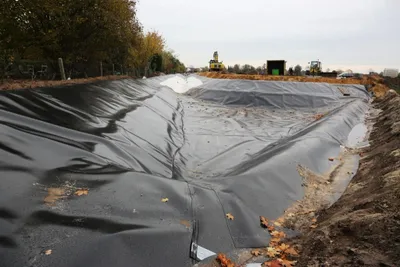
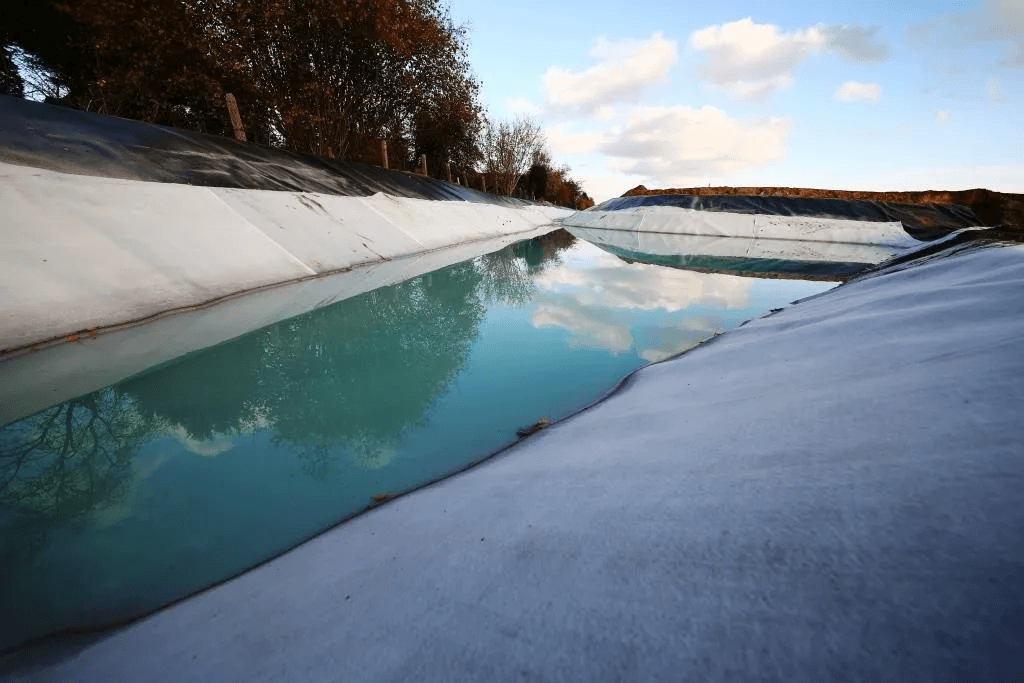
RCR® can be used to provide a protective armor over a new or existing berm. It can also be applied to rehabilitate a worn liner on the face of a berm. Overlapping sections of RCR® allow for effective coverage, and the product can also be fastened to steep slopes using U-pins or earth percussion anchors. Speak with an ITL representative to determine the proper anchoring system needed for your slope or berm.
Composition and Dimensions
Composed of three layers, RCR® has a geotextile layer, a dry concrete powder layer, and another geotextile layer. The layers are needle-punched together to create one solid composite material.
RCR® is available in two thicknesses: 7mm (ITL RCR-7®) and 12mm (ITL RCR-12®). Both thicknesses are provided in the standard roll size of 5m wide (approximately 16 ft., 4 in.) x 20m long (approximately 65 ft., 7 in.).

Questions about RCR® for Secondary Containment?
Call Leo Cortez for answers on RCR® durability, installation, long-term stability, pricing, and more.
Mine Tailings Pond
Case Study
Containing Fresh Water at a Mine Site in Arizona
Overview
RCR-7® was chosen to line the freshwater side of a tailings pond at an Arizona mine site. This protection was essential for the water containment critical to the mining process.

Project Goal
Cover one side of the tailings pond to prevent water from penetrating the center berm

Why RCR® for the Job
Alternatives considered included a geomembrane liner and traditional concrete.
Geomembrane was ruled out in favor of a more robust option to provide erosion control. This option was also bypassed for possible construction delays in this high-wind area and the potential of repeated repair. Traditional concrete was ruled out as a solution due to increased cost and difficult installation based on the slope angle and length.

Aspects of the Installation
A failing buried liner system along the face of the berm that separates fresh water from dried tailings was concerning. Also of concern were erosion-control issues caused by the prevalent high winds at the location.
Over 120,000 square feet of RCR-7® was installed safely and rapidly on a slope roughly 106 feet (32.3m) long. The slope angle was approximately 2:1. Installation involved a crane and spotter, with the crane lowering the product from behind the berm on the dry tailings pond, nearly 20 vertical feet below the top of the berm.
Two rolls of RCR-7® were used from the top anchor trench to the bottom anchor trench. The joint connecting the two rolls was overlapped, with the top edge of the bottom RCR-7® panel being pinned in place using evenly spaced anchors.

Completion
Although this project was budgeted for 23 working days, the installation was completed in less than 20 working days. This includes lost time due to equipment issues, high winds, rain, and snow.
Secondary Containment Control Q&A
Is fitting RCR® into the corners difficult?
No. RCR® can easily be cut and fitted to smoothly transition around corners.
Does RCR® attach to pipe penetrations or overflow swales?
RCR® and geomembranes attach to pipe penetrations in a similar manner.
Using stainless-steel flat bar and concrete wedge anchor bolts, RCR® can be sealed tightly to concrete aprons along the perimeter of the application. A typical anchor trench is used to secure the perimeter of the RCR® in place.
RCR® can be cut to fit around penetrations to create tight seals. Additionally, pipe penetrations can be sealed by creating a pipe boot or roof jack-style seal.
RCR® attaches to and is an effective solution for overflow swales. Proper termination of all edges of RCR®It is critical to prevent future erosion or undermining issues.
Will RCR® attach to existing products?
RCR® will attach to existing concrete, plastic liners, bituminous liners, etc. Contact us to discuss options and the best methods.
Is RCR® resistant to chemicals?
RCR® has a very high level of resistance to many chemicals. Wherever traditional concrete is used, ITL RCR® can be used. Please contact us for specific applications.
What if I need a leak-tight pond?
If you need a leak-tight secondary containment pond, we recommend using a geomembrane liner with RCR® applied on top. Installing both is simple. We offer geomembrane liners and will help you determine which ones are compatible for your chemical containment needs. Please call our team about lining secondary containment ponds.
Get Sturdy Environmental Protection
RCR® provides environmental protection as a secondary containment liner for containment ponds, splash pads, and berms.