






Start with what you know.
Some projects start with engineered drawings and a specified geomembrane. Others start with a containment need and a few known site conditions. Either is enough to begin the conversation.
You don’t need every detail finalized before contacting ITL. If you have a drawing, sketch or project specification, send it. If not, we can start with the information you already have.
What shapes a containment liner recommendation?
A containment liner shouldn’t be selected by thickness alone. What is being contained, expected service conditions, site conditions and installation plans can all affect the material and fabrication approach. ITL’s project qualification process considers these factors when reviewing liner applications.
What will the liner contain?
Secondary containment may involve water, fuel, chemicals, production fluids, tanks, equipment or other industrial uses. When chemicals are involved, ITL may request an SDS to help evaluate compatibility with potential liner materials.
Different geomembrane materials have different chemical-resistance characteristics, so material selection should be based on the application rather than simply a familiar polymer or thickness.
Explore containment and lining applicationsHas a liner material already been specified?
If the project already calls for a particular material, thickness or performance requirement, send that information with the project.
If it hasn’t been specified, ITL can help evaluate available options based on the application, chemical compatibility, exposure, expected service conditions and fabrication needs.
ITL works with several geomembrane types, including coated woven polyethylene, LLDPE and HDPE.
Explore liner materials and options
How long will the liner be in service?
Temporary and long-term containment can place different demands on a liner.
Useful details include whether the liner will be exposed or covered, anticipated UV exposure, traffic or equipment activity, and any project-specific performance requirements.
ITL’s liner qualification process includes expected duration.
What are the site and subgrade conditions?
The surface beneath a flexible liner matters.
Sharp objects, vegetation, protrusions and other irregularities can damage a geomembrane. Depending on the site and liner, a geotextile underlayment may be considered for additional protection. High groundwater or other subsurface conditions can also require additional planning.
Not every liner requires geotextile underneath it. That depends on the liner, subgrade and application.
Learn about geomembrane and geotextile optionsHow will the liner be installed?
ITL manufactures and supplies geomembrane liners for installation. We do not perform the installation.
Knowing how the installer plans to deploy the liner can still affect fabrication, folding, packaging and shipping.
Helpful details may include site access, available deployment equipment, penetrations or unusual site features, and whether large factory-fabricated panels make sense for the project.
Factory fabrication moves more seam work into a controlled environment before the liner reaches the jobsite and can reduce unnecessary field welding and installation complexity.
Learn about custom geomembrane factory fabricationWhen should you send ITL a drawing?
Engineered drawings, CAD files, site layouts and even basic sketches can help ITL understand the project configuration.
You don’t need to wait until the material has been selected or every detail is final.
No formal drawing yet? Send what you have.
Ready to talk through your project?
Start a Project Inquiry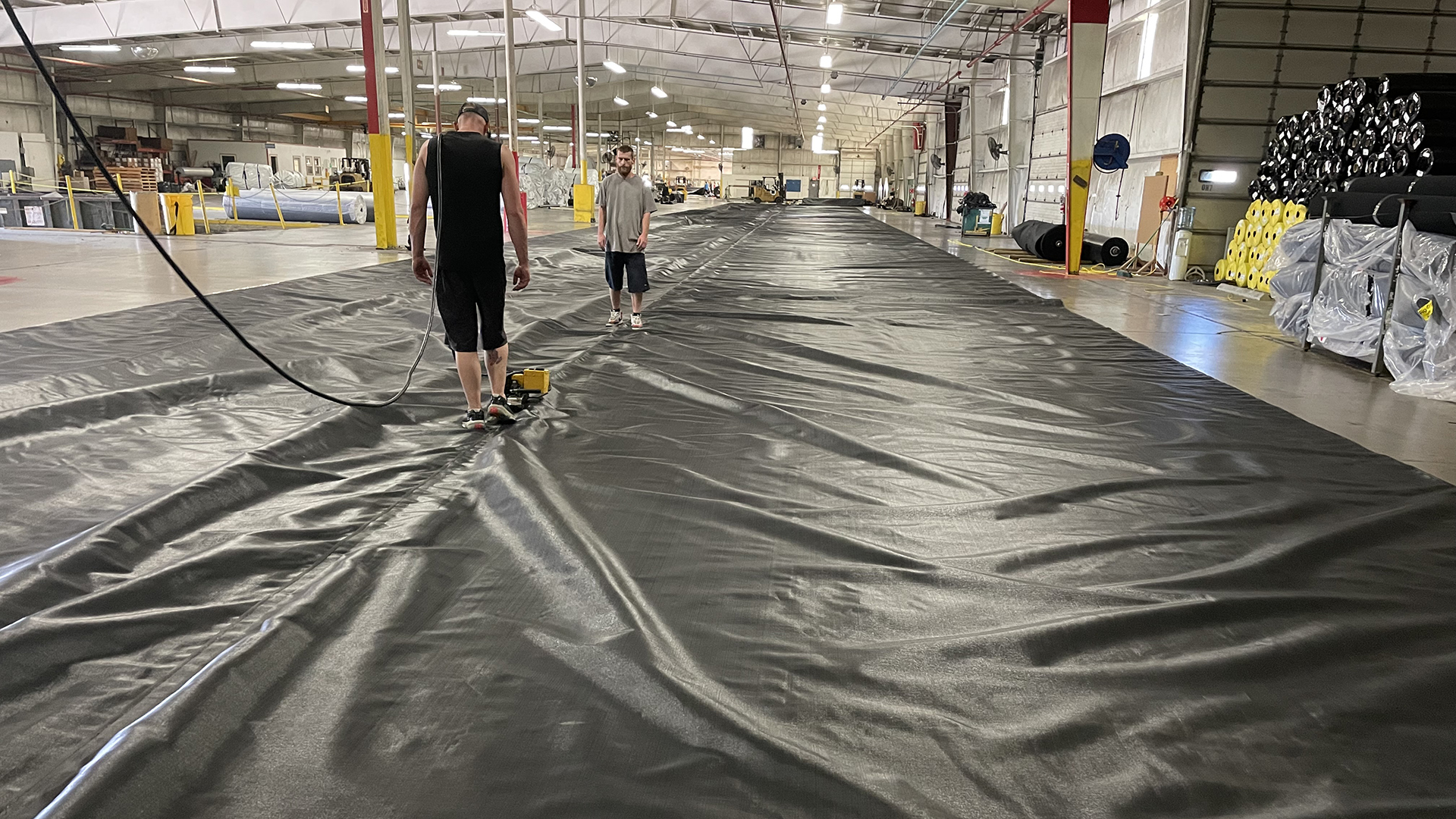
What happens after ITL reviews the project?
Once the application and project requirements are understood, the next step is determining how the liner should be fabricated and prepared for the jobsite.
Material review
Confirm the specified geomembrane or evaluate appropriate material options for the application.
Panel planning and fabrication
Develop a factory-fabricated layout around the project configuration and deployment needs.
Quality control
Material and seam testing are part of ITL’s factory QA/QC process before the finished liner leaves the facility.
Packaging for deployment
Finished liners can be rolled or folded based on how they will be transported, handled and deployed in the field.
What should you send with a quote request?
Send what you already have. You don’t need a finished project package before starting the conversation.
- What needs to be contained
- Material or performance specifications, if known
- Chemical information or an SDS, when applicable
- Expected duration and exposure
- Relevant site conditions
- Drawings, sketches or layouts you have available
- Known installation or deployment requirements
Mention them in your project details. After reviewing your inquiry, our team can arrange the best way to receive any supporting files.